Laboratory of Generative Systems and Sciences in Architecture and Built Environment
Genesis Lab is a research and development laboratory dedicated to advancing Generative Systems and the emerging field of Generative Sciences. The lab investigates how architectural and spatial configurations emerge from constraints, rules, and interactions across multiple scales. Its work integrates mathematical reasoning, discrete geometry, topology, and Spectral Graph Theory to study form, configuration, and system behaviour in both building and urban contexts. Genesis Lab approaches generative systems through three complementary modes of inquiry: 1) Deriving structured designs from functional requirements, using principled modelling, geometric reasoning, and formal logic. 2) Exploring discrete and modular configuration spaces, through combinatorial representations, topological structures, and rule-based generative grammars. 3) Developing generative design game sets, where designers, users, and cyber-physical components co-create spatial configurations within carefully structured multi-agent environments.Together, these modes form a unified framework for understanding how architectural and infrastructural systems can remain adaptable, legible, and rigorously structured over time. Modular building systems and dry-assembly logics serve as experimental testbeds, while the broader research agenda addresses the mathematics of generative spatial systems beyond any single application domain.Genesis Lab’s educational mission emphasizes geometric thinking, discrete representations, graphs, raster, and mesh-based reasoning, and algorithmic modelling as instruments of architectural inquiry. Students are trained to analyse configuration spaces, formalize design logics, and construct their own generative frameworks for reasoning about complex spatial systems. Committed to Open Science and Open Education, Genesis Lab fosters interdisciplinary collaboration and engages with academic and professional partners interested in advancing structured yet open approaches to spatial design.
Expertise

C# (Mat.NET, Meta.Numerics, Accord.NET), Python (NumPy, SciPy, NetworkX, Scikit-Learn, TensorFlow, OR-Tools, PyTorch, topoGenesis, COMPAS), MATLAB

Linear Algebra, Spectral Graph Theory, Calculus, Statistics and Probability, Control Theory

Shape Recognition, Manifold Learning, Natural Language Processing

Computer Graphics, Computer Aided Design, Computational Topology, Computational Geometry

Simulation Modelling, Differential Equations, Data Management, Data Modelling, Data Visualization, System Dynamics, Control, Agent-based Modelling

Open-Source Development, Version Control, Source Code Management
Contributors
Meet all the contributors who give life to Genesis! See the alumni here
Genesis Wall of Fame
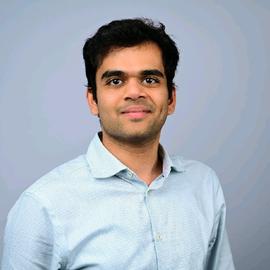
Aditya Soman
Former MSc Student| Computational Designer @ Ramboll
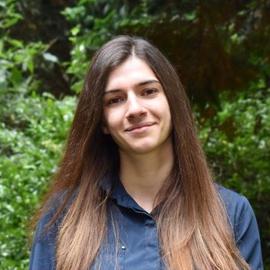
Anastasia Florou
Former MSc Student| Junior Software Developer & Computational Designer @ Sustainer Homes
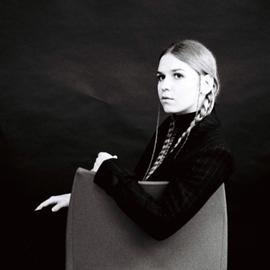
Anna Kaletkina
Former MSc Student @ TU Delft Faculty of Architecture, Architectural Engineering

Aradhana Tripathy
Former MSc Student Geoinformation Sciences @ University of Twente, Spatial Designer at Witteveen+Bos

Baolian Liu
Former MSc Student @ TU Delft Faculty of Architecture, Building Technology

Berend Vos
Former MSc Student @ TU Delft Faculty of Architecture, Architectural Engineering
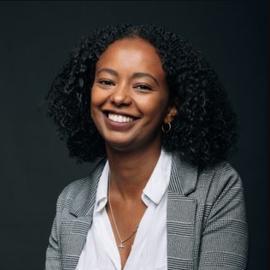
Bezawit Zerayacob Bekele
Former MSc Student| Project Engineer @ White Lioness Technologies
Dennis Hollanders
Former MSc structural engineering and Design @ TU/e| Artificial Intelligence Engineer @ Zympler
Jacek Baczkowski
Former MSc Student| Founder @ Play Well
Leticija Petrova
Former MSc Student| Project Manager and Parametric engineer @ Respace
Qinglu Chen
Former MSc Student @ TU Delft Faculty of Architecture, Building Technology
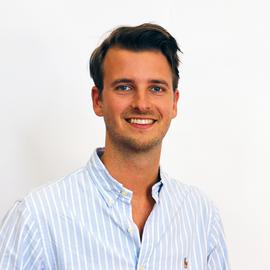
Roy Uijtendaal
Former MSc Student| Computational Design Specialist @ Nieman Consulting Ingenieurs

Selina Bitting
Former MSc Student| PhD Researcher at ETH Zürich, Block Research Group
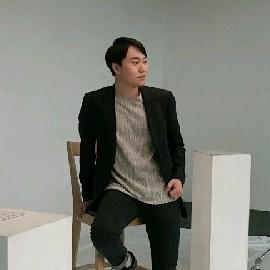
Solkyu Park
Former MSc Student| Computational Design Specialist @ Junglim Architecture
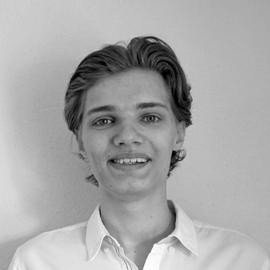
Tim Schumann
Former MSc Student @ TU Delft Faculty of Architecture, Building Technology
PhD Candidates & Researchers
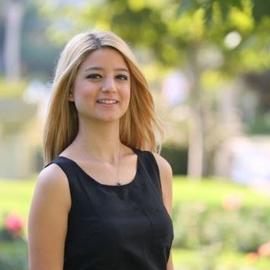
Cemre Çubukçuoğlu
Former PhD Candidate at TU Delft Faculty of Architecture|Research Assistant @ Yaşar University
Nan Bai
Former PhD Candidate at TU Delft, Faculty of Architecture|Assistant Professor in the section Heritage & Architecture
Oumayma Fegrouch
PhD candidate at Faculty of Geo-Information Science and Earth Observation (ITC) of the University of Twente

Shervin Azadi
TU/e
PhD Candidate
Generative Design, Collective Intelligence, Participatory Design, Numerical Computing, Swarm Intelligence, Multi Agent Systems
Zhuoran Jia
Former PhD Candidate at TU Delft, Faculty of Architecture|Postdoctoral Researcher @ South China University of Technology
Lab Directors

Pirouz Nourian
University of Twente
Generative Design Scientist/ Assistant Professor (tenured), Digital Design & Urban Systems, University of Twente
Generative Design, Gamification of Design, Participatory Design, Topology Optimization, Shape Optimization, Masonry Architecture, Numerical Computing, Scientific Computing, Applied Mathematics
Advisory Board
Members
Dr. Tom Van Mele
ETH Zurich
Senior Scientist|Co-director @ the Block Research Group (BRG)|Lead developer of COMPAS
Open-source Computational Frameworks, Computational Form-finding and Optimisation, Data Structures, Scientific Programming and Web Technologies

Dr.ir. Matthijs Langelaar
TU Delft
Associate Professor of Structural Optimization and Mechanics
Computational Engineering Design, Topology Optimization, Evolutionary Fluid-Structural Optimization
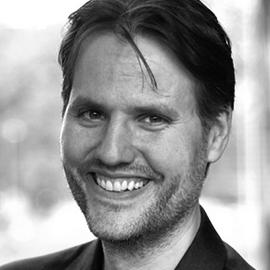
Prof. Elmar Eisemann
TU Delft
Professor of Computer Science|Head of Computer Graphics and Visualization Group
Real-time and Perceptual Rendering, Alternative Representations, Visibility, Image Processing, Vision, Content Creation, Visualization
Talks & Lectures

Interested to join? Contact us!